LIQUID / FINTECH · PRODUCT MVP
Giving a payments platform a clearer front end.
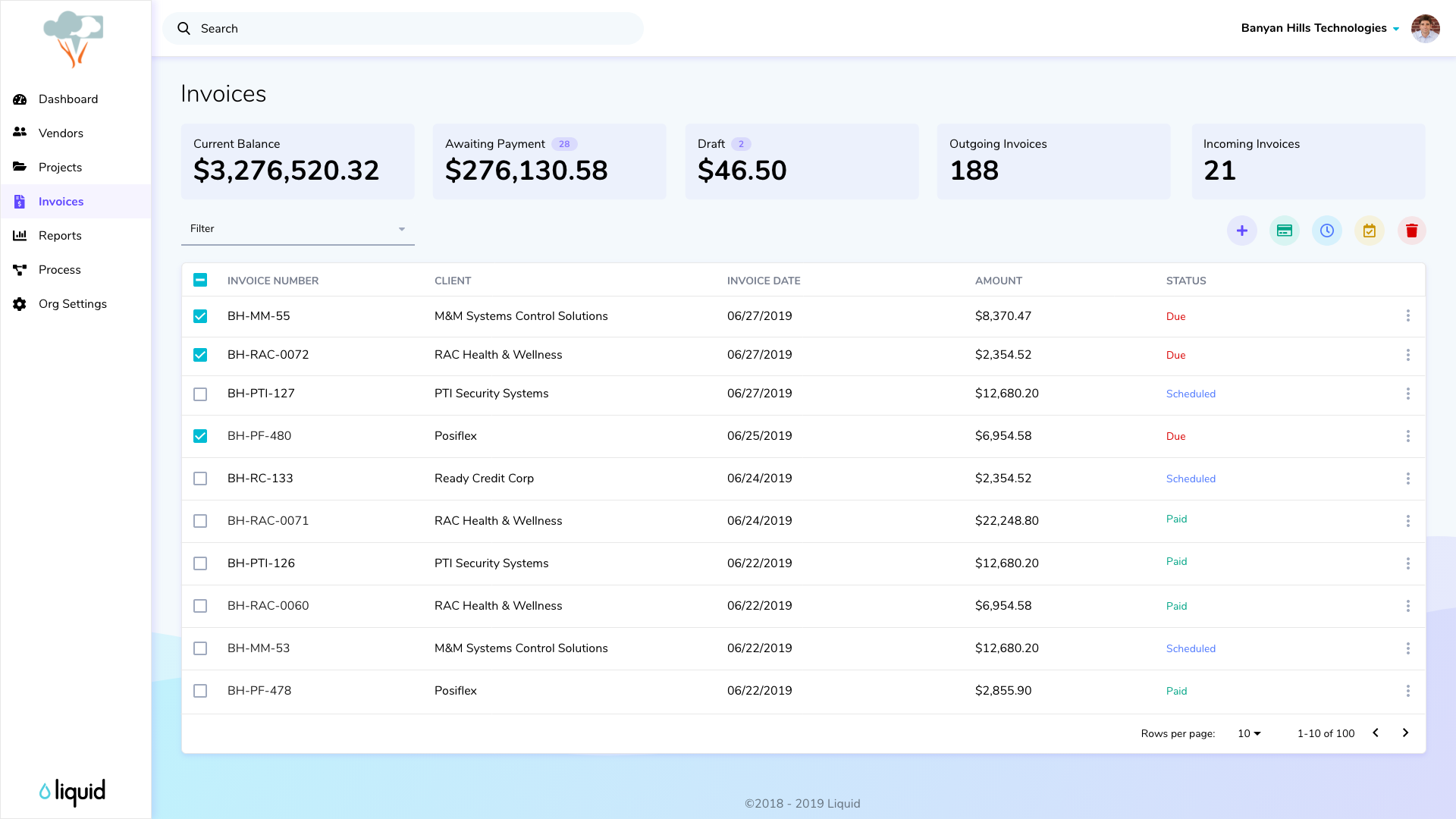
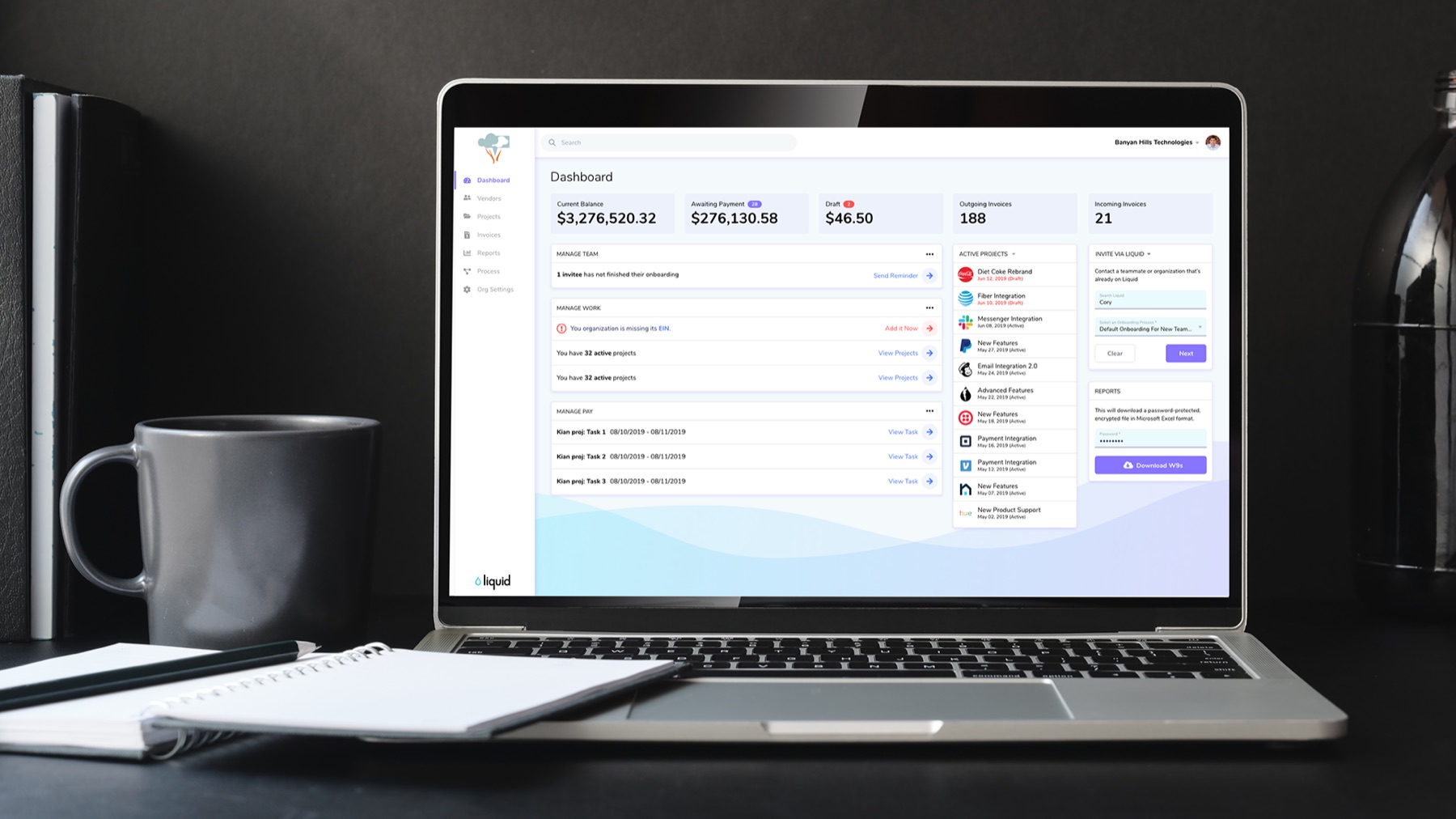
Liquid helped small businesses pay global contractors. I designed the front-end experience, from getting started to defining projects and handling payments.
- MY ROLE
- Lead UX Designer
- WHEN
- 2019 · 3 months
- FOCUS
- UX strategy, onboarding, visual systems, prototyping
AT A GLANCE
Liquid
A Techstars-backed startup with an existing backend and an early front end. My three-month engagement covered both UX and UI design.
WHAT THE WORK DELIVERED
An onboarding flow with fewer required fields, project-creation designs, a style guide, and interactive prototypes.
VISUAL SYSTEM
Establish the foundation before expanding the flows.
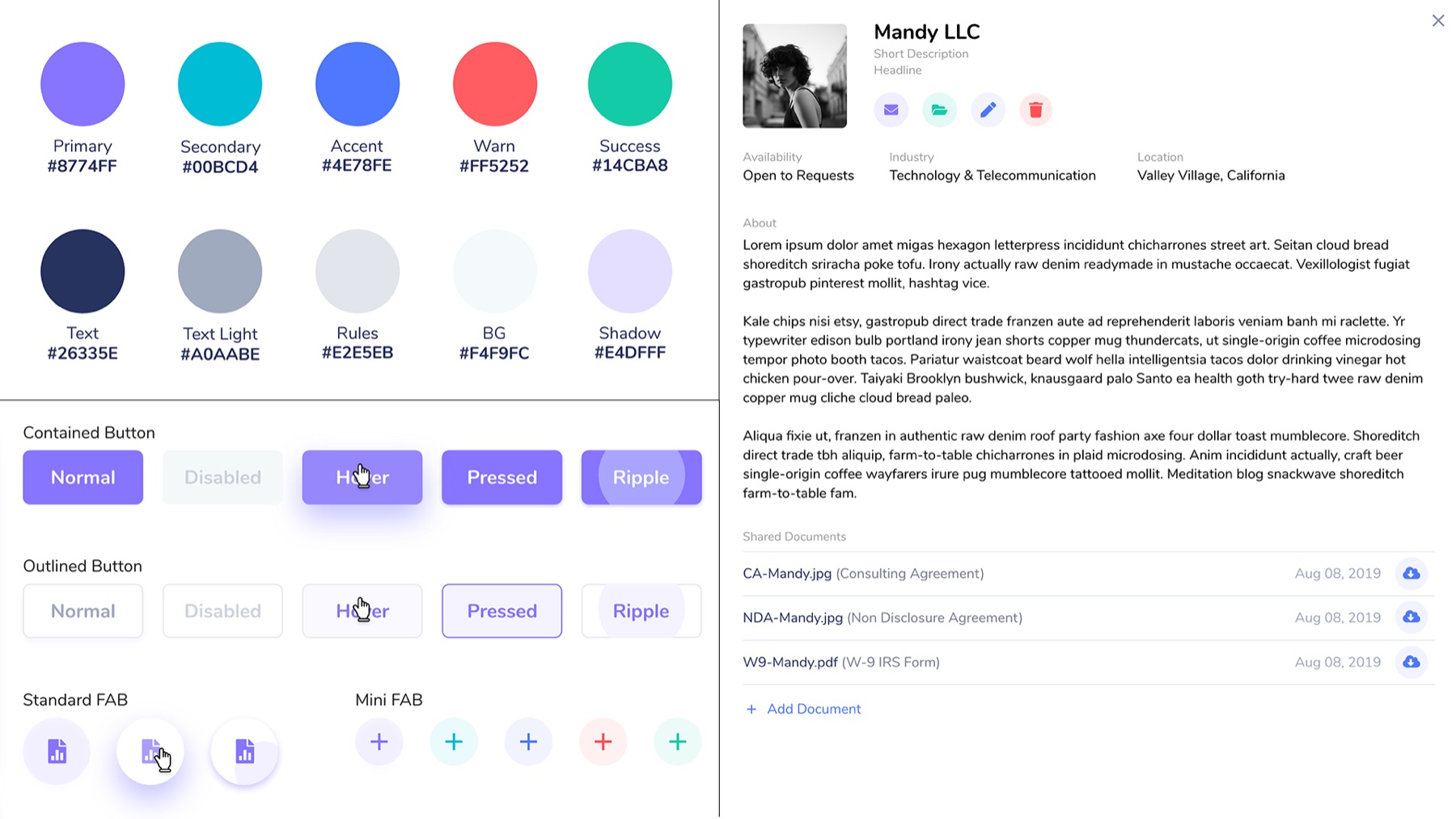
I started by defining Liquid’s look and feel through a foundational style guide. With three months to shape the front end, establishing shared patterns early gave us a structure to build on as I moved into onboarding and the other product areas.
The guide covered typography, colors, buttons, and interface states. It provided a consistent visual language for the high-fidelity designs and prototypes that followed.
ONBOARDING
Ask for what is required. Explain what remains.
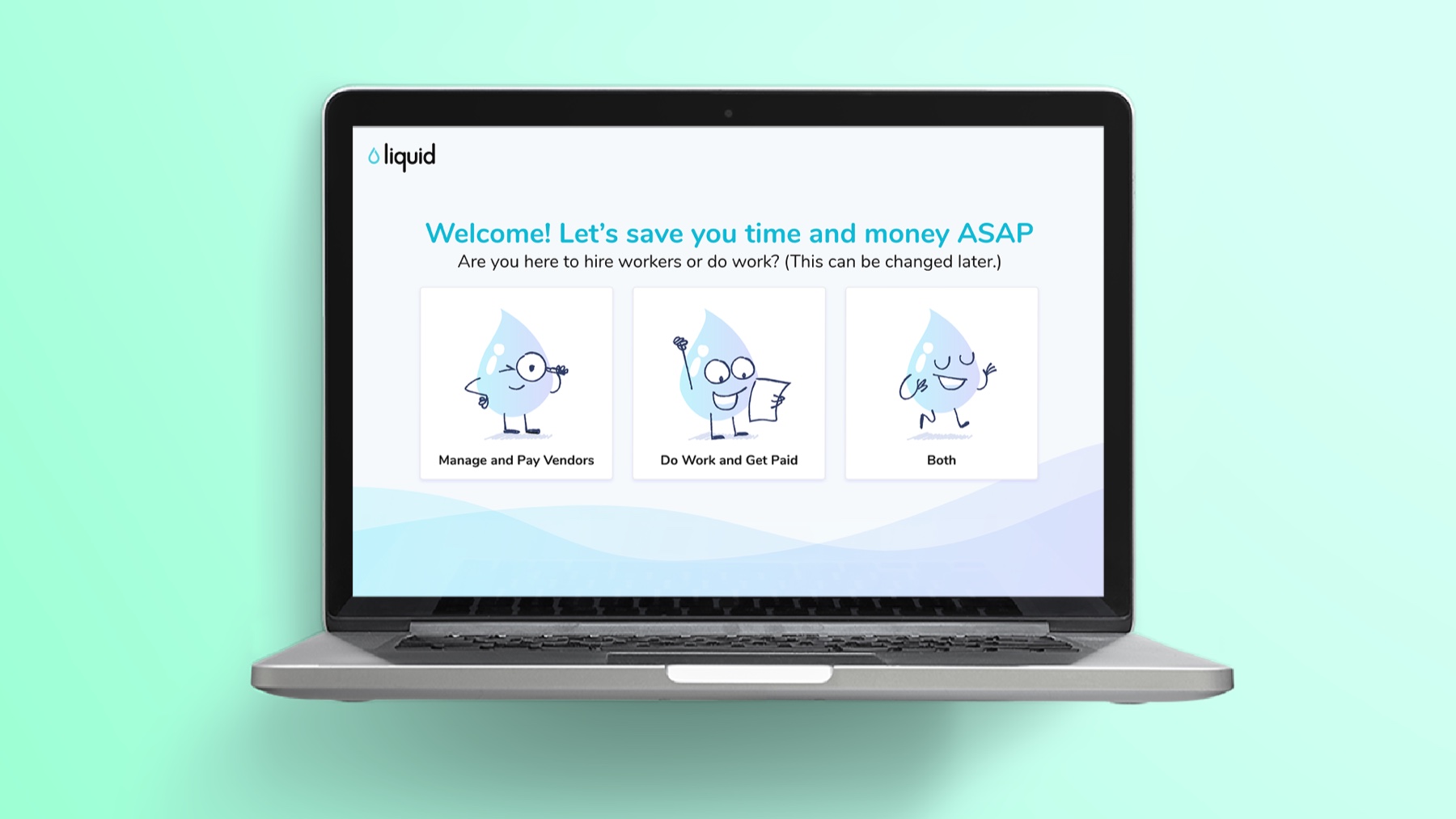
I worked with the team to identify which fields were essential based on payment requirements. We removed fields that weren’t strictly required and added explanatory copy and illustrations to make the remaining steps easier to understand.
Nonessential details could be completed later, keeping the initial setup focused on what people needed to get started.
PROJECT CREATION
Define the engagement.
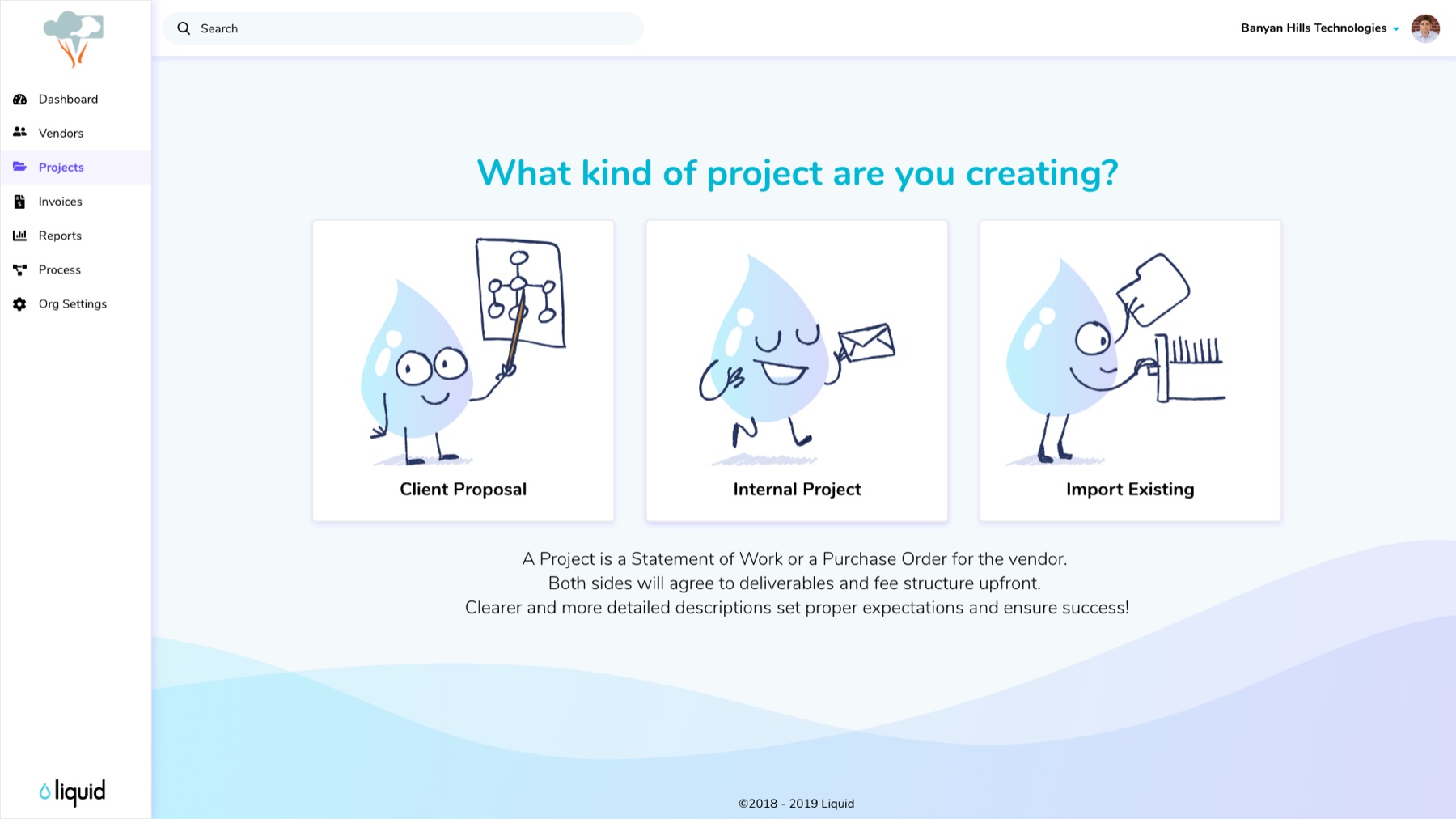
A project defined the engagement: the work, participants, deliverables, amount, and fee structure. I designed the front-end flow for capturing those details.
The opening screen offered a client proposal, an internal project, or importing an existing project. Labels, illustrations, and supporting copy introduced each option.
DEVELOPMENT COLLABORATION
Carry the design into development.
I worked alongside developers as they implemented the front end, clarifying interactions, reviewing builds, and adapting designs to technical constraints. The visual system and prototypes gave us a shared reference when working through those adjustments.